I mostly love this poem by Charles Harper Webb (who is a poet, psychotherapist and guitarist!).
It starts with N losing track of his wife, Karen, in kelp while scuba diving. His fear, so palpable, is instantly recognizable. My own breath felt clenched as I worried about her drowning, caught in the seaweed. (I have my own such fears when it comes to ever scuba diving.)
N then moves on to tell of other instances when Karen got lost. When she was a child, when he stood waiting for her at the alter (and I loved this example - it may have been truthful - she may have just been lost, but I like to imagine his impatience and the wait for her to emerge seeming forever and him wondering if she had gotten lost, she was taking so long).
N then gets to the impetus of his poem and of Karen being lost. Karen is in labor and N fears again that Karen may get 'lost' in the act - that she may not be the same Karen afterwards.
I love that in describing Karen, you get a good sense of N - that he is a worrier and that he likes to hold tight those whom he loves.
I like this poem a lot, but I hate this line, " I'll clasp your hands when you push / through the fronds of childbirth", which might just be the most cringe-inducing image for labor I've every heard (the fronds of childbirth?! [thumbs down!]).
However, beside that line, this poem rings true for me and contains such love (and loving worry) that I feel very sentimental as I read it aloud.
Favorite line: " Will she become / my son's mother, and nothing more?"
Monday, February 25, 2013
Sunday, February 24, 2013
A Moment (Philip Schultz)
Today's is a skinny-little poem called 'A Moment' by Philip Schultz.
It only takes a moment to read (less than one commercial during an Oscar's break) and I like that it clues you into that fact by having most lines be only 3 words long.
The poem contains phrases/lines that define or describe 'a moment'. Some neat phrasing/images, but overall, I'm not wowed by this poem or its concept.
I do like that the last 5 lines are complete - all ending with a period. Earlier, each moment took multiple lines, but as the poem goes on things seem to speed up.
So a moment to read --> a moment's worth of 'talk' concerning it.
Favorite line: "A plea to begin over again."
It only takes a moment to read (less than one commercial during an Oscar's break) and I like that it clues you into that fact by having most lines be only 3 words long.
The poem contains phrases/lines that define or describe 'a moment'. Some neat phrasing/images, but overall, I'm not wowed by this poem or its concept.
I do like that the last 5 lines are complete - all ending with a period. Earlier, each moment took multiple lines, but as the poem goes on things seem to speed up.
So a moment to read --> a moment's worth of 'talk' concerning it.
Favorite line: "A plea to begin over again."
Saturday, February 23, 2013
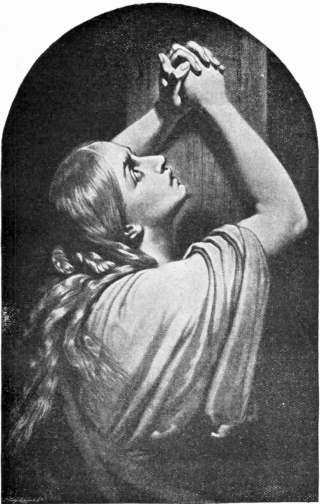
Magdalene Poem (John Taggart)
Here's another poem about Mary Magdalene. This one's by John Taggart.
Even though both Magdalene poems were written recently (both poets were born mid-1900s), this one feel much more modern. The phrases are experimental and even though this one, like yesterday's is non-direct with the meaning, I like it better here, since this poem is non-linear and isn't trying to tell you a story so much as get a feeling across.
What I get from the poem is something of a couple (see how many times a word is repeated - all those couples) that can never quite make a match. There is always something blocking the connection. And it sucks - 'beaten and broken', but there doesn't seem a way around the disconnect. It even ends with the fact that they (or one or the other) are 'untouchable' and that that is actually 'fortunate[ly]'.
So maybe you see Mary Magdalene and Jesus and maybe it's for the best that they were both, in their ways, 'untouchable fortunately, / untouchable'.
Favorite line: "already beaten and broken / peaceful if breaking if breaking / and entering the already broken is peaceful"
Even though both Magdalene poems were written recently (both poets were born mid-1900s), this one feel much more modern. The phrases are experimental and even though this one, like yesterday's is non-direct with the meaning, I like it better here, since this poem is non-linear and isn't trying to tell you a story so much as get a feeling across.
What I get from the poem is something of a couple (see how many times a word is repeated - all those couples) that can never quite make a match. There is always something blocking the connection. And it sucks - 'beaten and broken', but there doesn't seem a way around the disconnect. It even ends with the fact that they (or one or the other) are 'untouchable' and that that is actually 'fortunate[ly]'.
So maybe you see Mary Magdalene and Jesus and maybe it's for the best that they were both, in their ways, 'untouchable fortunately, / untouchable'.
Favorite line: "already beaten and broken / peaceful if breaking if breaking / and entering the already broken is peaceful"
Friday, February 22, 2013
Magdalene (Marie Howe)
Magdalene by Marie Howe is a short poem that only hints at what is happening and requires you to fill in a lot of the details.
From the title, I get that N is Mary Magdalene and then guess that the "he" in the poem is Jesus. Or perhaps, if not the people themselves then stand-ins.
The poem seems to be taking place on a college campus and everything is going as normal when N (Magdalene) has a stray thought "I feel as if I’m going to lose something today", which once said suddenly seems prophetic. She rushes off to find/save Jesus or her modern version of Him.
It's a short poem which, where I found it on poets.org, is followed by an 'About this poem' where the author is interviewed. In that she says,
"This poem is from a series written in Mary Magdalene's voice. When my brother was dying from complications from the AIDS virus in his apartment in Rochester New York, I learned that other young men had come home to die, some of them in their old childhood bedrooms on the suburban streets they had left for big cities. Hardly anyone in those suburbs knew what was occurring in their midst. Later that year I heard a banging hammer—someone banging nails two or three yards away from my own apartment in Cambridge, and I thought of those young men dying at home, and of the crucifixion—how someone hearing the banging hammer might not be aware of the true nature of what was being done."
Without her explanation I would have doubted much more about this evasive poem. It's really kind of half-said. Which is fine, but not terribly illuminating. I do love her idea for the poem - but I think it's better captured in her prose than in her poem.
Favorite line: "You know it was funny because he seemed so well the night before"
From the title, I get that N is Mary Magdalene and then guess that the "he" in the poem is Jesus. Or perhaps, if not the people themselves then stand-ins.
The poem seems to be taking place on a college campus and everything is going as normal when N (Magdalene) has a stray thought "I feel as if I’m going to lose something today", which once said suddenly seems prophetic. She rushes off to find/save Jesus or her modern version of Him.
It's a short poem which, where I found it on poets.org, is followed by an 'About this poem' where the author is interviewed. In that she says,
"This poem is from a series written in Mary Magdalene's voice. When my brother was dying from complications from the AIDS virus in his apartment in Rochester New York, I learned that other young men had come home to die, some of them in their old childhood bedrooms on the suburban streets they had left for big cities. Hardly anyone in those suburbs knew what was occurring in their midst. Later that year I heard a banging hammer—someone banging nails two or three yards away from my own apartment in Cambridge, and I thought of those young men dying at home, and of the crucifixion—how someone hearing the banging hammer might not be aware of the true nature of what was being done."
Without her explanation I would have doubted much more about this evasive poem. It's really kind of half-said. Which is fine, but not terribly illuminating. I do love her idea for the poem - but I think it's better captured in her prose than in her poem.
Favorite line: "You know it was funny because he seemed so well the night before"
Thursday, February 21, 2013
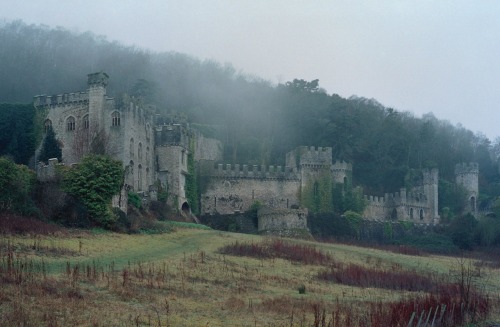
The Ruin (Jacob Polley)
Tonight, I saw a commercial for the return of the show Game of Thrones. So when I read this poem by Jacob Polley I kept picturing scenes from the show - the castle and the town - only, as they would be later, in ruins.
The poem describes ruins of a medieval castle (or town). It's a loving portrait that makes me feel as though I were there seeing the same scene. Although, it helps that there are shows and books that cover much of the same ground so I already have a preset image when he gives keywords like 'Anglo-Saxon' and 'stronghold'.
The lines are iambic pentameter (I'm pretty certain) and that also adds to the old-fashioned feel of the thing. It's classic meter to talk about a classic scene.
Favorite line: "And the builders are broken down, bone by bone, / mindless and muddled together in the bottomless muck."
The poem describes ruins of a medieval castle (or town). It's a loving portrait that makes me feel as though I were there seeing the same scene. Although, it helps that there are shows and books that cover much of the same ground so I already have a preset image when he gives keywords like 'Anglo-Saxon' and 'stronghold'.
The lines are iambic pentameter (I'm pretty certain) and that also adds to the old-fashioned feel of the thing. It's classic meter to talk about a classic scene.
Favorite line: "And the builders are broken down, bone by bone, / mindless and muddled together in the bottomless muck."
Wednesday, February 20, 2013
A Cup of Water Turns into a Rose (excerpt) (Lawrence Raab)
Today's poem by Lawrence Raab is 1/7th of the whole thing. This first part is long enough though (it's broken up into 6 sections) , so the full thing must be quite the epic.
There is no cup of water or rose in this abridged selection, but still there is transformation and real and unreal things.
This poem seems to be concerned with dreaming, with the line between reality and imagined. between nature and the constructed. Oh, and a man named John Ruskin - whom I had never heard of, but in looking him up, seems to have been an art critic in the Victorian age who "emphasised the connections between nature, art and society" (thank you, Wikipedia).
I like that in this poem, it starts with N inside a dream, but then he wakes up and then goes on to dream/half-imagine a war scene and a stranger who knows about such things (he may actually be talking to the stranger in real life).
It's all a bit of muddle, but I like its complexity.
The poem -- " "At times," he says, "the impossible / looks like it's on our side / until it isn't." " The impossible, the dream, the imagined seems so real - so true, that it isn't until it's over that you even knew it really was a dream or imagined or impossible.
Maybe it's because I don't have access to the other 6 parts, or perhaps it's my unfamiliarity with Ruskin, but I'm having a hard time coming to a conclusion about this poem. I feel like the point is almost -just- there, but I can't bring my observations to thread through the whole poem (er, section). However, I still like and feel challenged by this poem. And I am now curious to learn more about John Ruskin.
Favorite line: "I noticed / the radio—shiny and black, with huge dials, / like nothing I'd ever owned, maybe/something out of the Second World War, / or a movie about it"
There is no cup of water or rose in this abridged selection, but still there is transformation and real and unreal things.
This poem seems to be concerned with dreaming, with the line between reality and imagined. between nature and the constructed. Oh, and a man named John Ruskin - whom I had never heard of, but in looking him up, seems to have been an art critic in the Victorian age who "emphasised the connections between nature, art and society" (thank you, Wikipedia).
I like that in this poem, it starts with N inside a dream, but then he wakes up and then goes on to dream/half-imagine a war scene and a stranger who knows about such things (he may actually be talking to the stranger in real life).
It's all a bit of muddle, but I like its complexity.
The poem -- " "At times," he says, "the impossible / looks like it's on our side / until it isn't." " The impossible, the dream, the imagined seems so real - so true, that it isn't until it's over that you even knew it really was a dream or imagined or impossible.
Maybe it's because I don't have access to the other 6 parts, or perhaps it's my unfamiliarity with Ruskin, but I'm having a hard time coming to a conclusion about this poem. I feel like the point is almost -just- there, but I can't bring my observations to thread through the whole poem (er, section). However, I still like and feel challenged by this poem. And I am now curious to learn more about John Ruskin.
Favorite line: "I noticed / the radio—shiny and black, with huge dials, / like nothing I'd ever owned, maybe/something out of the Second World War, / or a movie about it"
Tuesday, February 19, 2013
Break (Dorianne Laux)
I found this poem by Dorianne Laux on Poetry 180 which is a poem-a-day site for teachers/students in high school.
It's a pretty concrete poem (good for teaching) about parents putting together a puzzle while their daughter teenages (a needed verb - like sulks, but more complicated) upstairs.
The parents enjoy the simple act of solving the puzzle - more so currently, since now, their lives, their daughter are so fraught with difficulty. Their real problems, unlike the puzzle, are near impossible to put together/to solve.
They will have to return to attempting to fix the ruptures in their own lives at some point, but in the meantime they complete the puzzle as a reprieve - a pause. It is hard to deal with complex problems only. A mild puzzle is an appropriate break from it all for these two.
It's a nice poem, but one that I will probably forget before too much longer. It doesn't have much that would draw me to it again and again. No stunning language, no surprises or deeply held emotions (for me). It's mild - very much like a puzzle.
Favorite line: "We do this as the child / circles her room, impatient / with her blossoming"
It's a pretty concrete poem (good for teaching) about parents putting together a puzzle while their daughter teenages (a needed verb - like sulks, but more complicated) upstairs.
The parents enjoy the simple act of solving the puzzle - more so currently, since now, their lives, their daughter are so fraught with difficulty. Their real problems, unlike the puzzle, are near impossible to put together/to solve.
They will have to return to attempting to fix the ruptures in their own lives at some point, but in the meantime they complete the puzzle as a reprieve - a pause. It is hard to deal with complex problems only. A mild puzzle is an appropriate break from it all for these two.
It's a nice poem, but one that I will probably forget before too much longer. It doesn't have much that would draw me to it again and again. No stunning language, no surprises or deeply held emotions (for me). It's mild - very much like a puzzle.
Favorite line: "We do this as the child / circles her room, impatient / with her blossoming"
Monday, February 18, 2013
A Song (Ghassan Zaqtan)
Today's poet, Ghassan Zaqtan, is a Palestinian and his poem, "A Song", seems to be about the continual state of war that that area of the world seems to be in. Either at war, or tensing for the next.
It's a short poem (perhaps the length of the cease-fire?) and despite its title I don't find it to be very musical. There is not a lot of lilt in these lines.
It seems to be just a breather - the length of time needed to roll and smoke a cigarette - but this poem doesn't seem to do much more. I don't know, it's fine, but without any specialness in the language or in the overall point, I can't get too enthused about it.
Favorite line: "The glory that has been evenly split / among everyone / into medals for the leaders / praise for rank and file / and pictures for the dead"
It's a short poem (perhaps the length of the cease-fire?) and despite its title I don't find it to be very musical. There is not a lot of lilt in these lines.
It seems to be just a breather - the length of time needed to roll and smoke a cigarette - but this poem doesn't seem to do much more. I don't know, it's fine, but without any specialness in the language or in the overall point, I can't get too enthused about it.
Favorite line: "The glory that has been evenly split / among everyone / into medals for the leaders / praise for rank and file / and pictures for the dead"
Sunday, February 17, 2013
Summer Elegy (David Livewell)
I love this poet's last name - Mr. Livewell. Isn't that great? The poem, however, I don't love as much.
I think I am the wrong audience. If I had a background in summer baseball games or listening to live events via radio or family road trips in the old station wagon or was even old enough that the many (many) brand names he drops would echo in memory, then perhaps.
But none of that is true, so for me, this poem is a piece of nostalgia from a stranger's history and I can't bring myself to care. It doesn't strike an emotional note for me and it doesn't hit any larger truths either. It's a fine, tight poem about one man's past, but it doesn't do it for me.
The language doesn't impress me either. There are a lot of brand names here and I guess that would root it in place for someone familiar with any of them, but it reads overdone to me. Almost like a commercial. This line makes me feel the outsider and makes me want to skim: "sipping Schmidt's / and dipping Reisman pretzel sticks in blobs / of mustard in between their puffed Pall Malls".
I do like that the poem is just one long stanza. Even though the words/lines are measured and adult-sounding, the lack of stanza breaks brings childish excitement to the thing (rushing/never pausing for even a breath).
Favorite line: "He seemed to wait / on possibilities that hung like pop flies."
I think I am the wrong audience. If I had a background in summer baseball games or listening to live events via radio or family road trips in the old station wagon or was even old enough that the many (many) brand names he drops would echo in memory, then perhaps.
But none of that is true, so for me, this poem is a piece of nostalgia from a stranger's history and I can't bring myself to care. It doesn't strike an emotional note for me and it doesn't hit any larger truths either. It's a fine, tight poem about one man's past, but it doesn't do it for me.
The language doesn't impress me either. There are a lot of brand names here and I guess that would root it in place for someone familiar with any of them, but it reads overdone to me. Almost like a commercial. This line makes me feel the outsider and makes me want to skim: "sipping Schmidt's / and dipping Reisman pretzel sticks in blobs / of mustard in between their puffed Pall Malls".
I do like that the poem is just one long stanza. Even though the words/lines are measured and adult-sounding, the lack of stanza breaks brings childish excitement to the thing (rushing/never pausing for even a breath).
Favorite line: "He seemed to wait / on possibilities that hung like pop flies."
Saturday, February 16, 2013
My Love Sent Me a List (Olena Kalytiak Davis)
The title of this poem is great. It automatically starts my imagination going (what list? why sent? why aren't you together?......). The poem itself, by Olena Kalytiak Davis, is a sonnet and with the mention of a Moor (coupled with the fact that it is a sonnet) brings to mind Shakespeare. But with Davis' fun use of parentheticals and other grammatical tricks makes this a modern-sounding poem.
I don't quite understand this line: "And left, none-the-less, the Greater Moor of me." Anyone, any leads? A Moor is someone from Northern Africa, right? Othello was a Moor. But does Moor come with certain characteristics?
But even not getting the full meaning behind the last line, I really like the penultimate line: "And yet these mores undid but his own plea(s)(e)". In sending the note with all her faults to N, he is protesting a bit too much. (Another Shakespearean influence! - Hamlet's "The lady doth protest too much, methinks") I also really love the use of the two parentheses. Layered meaning - fun and clever.
This poem is almost too clever for its own good. I like it.
Favorite line: "O my Love sent me a lusty list"
I don't quite understand this line: "And left, none-the-less, the Greater Moor of me." Anyone, any leads? A Moor is someone from Northern Africa, right? Othello was a Moor. But does Moor come with certain characteristics?
But even not getting the full meaning behind the last line, I really like the penultimate line: "And yet these mores undid but his own plea(s)(e)". In sending the note with all her faults to N, he is protesting a bit too much. (Another Shakespearean influence! - Hamlet's "The lady doth protest too much, methinks") I also really love the use of the two parentheses. Layered meaning - fun and clever.
This poem is almost too clever for its own good. I like it.
Favorite line: "O my Love sent me a lusty list"
Subscribe to:
Posts (Atom)